Are casinos truly luck-based? Debunking common myths
The Role of Probability in Casino Games
Many people believe that casinos operate solely on luck, but this notion overlooks the critical role of probability in casino games. Each game, from slots to poker, is designed with specific odds that dictate the likelihood of winning. For instance, in games such as roulette, the outcomes are determined by a complex interplay of probability, statistics, and mathematical algorithms, which means that while luck plays a role, skill and strategy can also influence the outcome significantly. Additionally, understanding the payment methods is essential, as Sharkroll online casino payments can greatly impact a player’s overall experience.
Understanding how probability works in casinos is essential for anyone looking to improve their gaming experience. For example, in blackjack, players can utilize strategies such as card counting, which allows them to make more informed decisions. This strategy relies on understanding the statistical probabilities of the remaining cards in the deck. Therefore, while the luck factor is present, educated strategies can help players gain a competitive edge, demonstrating that not all outcomes are purely random.
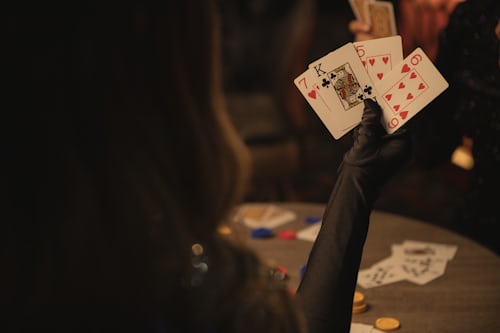
Another example is poker, where success often stems from a combination of luck and skill. Players must read their opponents, manage their bankrolls, and make calculated decisions based on probabilities. Unlike games that rely entirely on chance, poker is influenced by the players’ skills, making it an excellent example of how luck and strategy coexist in the casino environment. This shows that casinos are not merely places where luck reigns supreme, but venues where probability plays a foundational role.
Debunking the ‘Hot’ and ‘Cold’ Streak Myth
A prevalent myth in the gambling community is the belief in ‘hot’ and ‘cold’ streaks, where players think that a table or machine is more likely to produce wins or losses based on recent outcomes. This perception can lead gamblers to make irrational decisions, such as believing that a slot machine is ‘due’ for a payout after a series of losses. In reality, these machines operate on Random Number Generators (RNG), ensuring that each outcome is entirely independent of the last, and past results do not influence future spins.
The idea of streaks can be equally misleading in table games like blackjack or roulette. For instance, players might assume that if red has appeared five times in a row on a roulette wheel, black is somehow more likely to occur on the next spin. However, each spin is an independent event influenced by the same probabilities as all previous spins. Understanding this concept is crucial for gamblers, as relying on such myths can lead to poor decision-making and financial loss.
As the gaming industry continues to evolve with technology, the prevalence of statistical education among players has increased as well. Players who arm themselves with knowledge about RNG and the true nature of streaks can approach their gaming experiences with a clearer mindset. As they recognize that streaks are a byproduct of chance rather than predictive patterns, they can make more rational betting choices, thus enhancing their overall gambling strategy.
The Influence of Casino Management and House Edge
Another fundamental aspect to consider is the house edge, which is the mathematical advantage that casinos have over players in any game. This edge varies by game type but consistently ensures that, over extended play, the house will always come out on top. For example, in games like slots, the average return to player (RTP) percentage can be around 90%, meaning that, on average, players will only win back 90 cents for every dollar wagered over time, creating a guaranteed profit for the casino.
Casino management employs various tactics to maintain this advantage, such as setting game rules, adjusting payouts, and designing layouts that encourage more play. For instance, the rules of blackjack can significantly influence the house edge based on how many decks are used or whether the dealer hits or stands on soft 17. Understanding these nuances can provide players with insights into which games are more favorable, allowing them to make smarter choices that capitalize on their odds.
Moreover, the psychological manipulation in casinos can sometimes overshadow the luck aspect of gaming. Casinos are designed to keep players engaged, with bright lights, sounds, and comfortable environments that encourage them to play longer. By understanding these elements, players can recognize how their emotions may influence their gambling decisions, allowing them to establish boundaries and awareness of their experience, rather than falling prey to the allure of luck.
The Role of Skill in Casino Games
While luck is often touted as a significant factor in casino games, the role of skill cannot be underestimated, especially in certain games. For instance, in poker, players who develop their skills, such as bluffing, reading opponents, and knowing when to bet, can significantly increase their chances of winning. Skillful players who understand the game’s dynamics and employ strategies based on probability can consistently outperform their less skilled counterparts.
Another example is in games like blackjack, where players can use tactics like card counting to gain an advantage. While many view this technique as borderline cheating, understanding how to manipulate the game’s odds through skill demonstrates the balance between chance and strategy in casino settings. This implies that the outcome is not solely determined by luck but rather a result of skillful play and informed choices made by the gambler.
Furthermore, even in luck-based games like slots, players can make skillful decisions regarding bankroll management and game selection. By choosing machines with higher RTP rates or implementing strategies for maximum bet placement, individuals can exert some level of control over their gaming experience. Therefore, recognizing the importance of skill in conjunction with luck reshapes the perception of casinos as merely luck-based environments.
Conclusion: Understanding Your Casino Experience
In conclusion, while luck undeniably plays a role in casino games, the influence of probability, skill, and house edge illustrates a more complex environment than simply leaving outcomes to chance. By debunking common myths surrounding luck and understanding the mechanics behind the games, players can approach their gambling experience with a more informed perspective. This awareness can lead to better decision-making and potentially more favorable outcomes during gameplay.
As curiosity about the gaming experience continues to grow, it is essential for players to engage with educational resources, whether through books, online forums, or workshops. By continuously learning about game strategies and the underlying probabilities, players can enhance their skills and enjoy a richer experience in the world of casinos. Recognizing the balance between luck and skill empowers players to approach games with a strategic mindset rather than relying solely on chance.
Ultimately, the casino experience is multifaceted, requiring wisdom and understanding to navigate successfully. By debunking myths and focusing on a blend of luck, skill, and strategy, players can enjoy their time in casinos more fully and potentially increase their chances of success. This holistic understanding fosters a more rewarding gambling experience, making it essential for all players to embrace both the luck and skill aspects of their favorite games.